
About
I have always loved solving difficult problems — especially when the answer can make a real difference.
I am drawn to situations where the information is incomplete, the system is changing, and a decision still has to be made. My instinct is to bring structure to the uncertainty: clarify the real question, determine what the evidence can support, and turn the analysis into something people can act on.
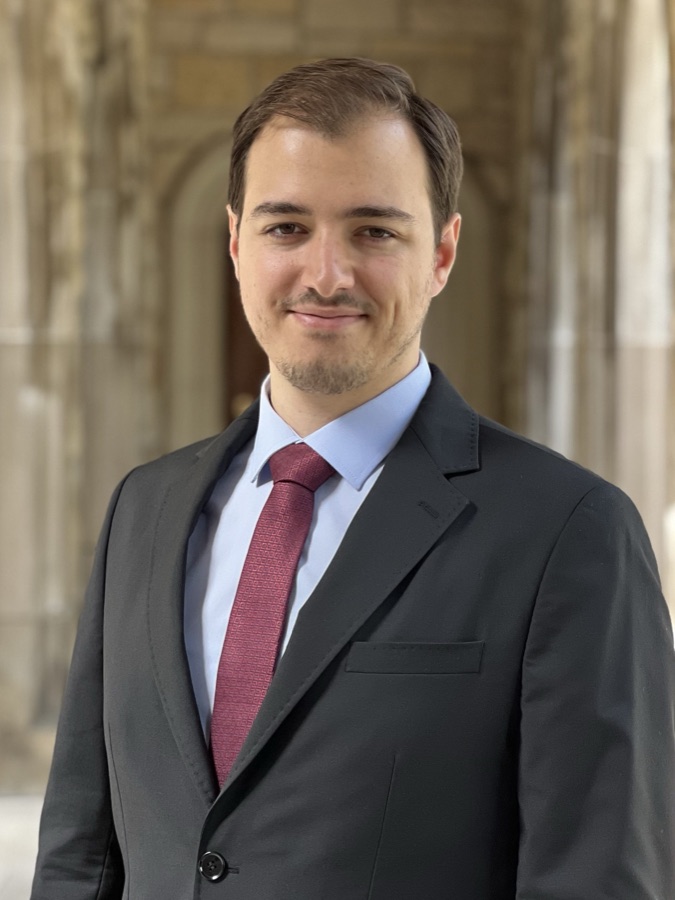
What connects my work
That motivation has taken me across research, data consulting, entrepreneurship, and public communication. The settings are different, but the work often begins in the same place: an important problem without a ready-made playbook.
Across those settings, I have learned to approach difficult problems from several directions. Research taught me to define the question precisely. Statistics taught me to be honest about uncertainty. Building a business taught me that analysis must eventually become a decision — and that someone must take responsibility for what follows. Consulting and teaching reinforced another lesson: an answer is useful only when it addresses the real problem and can be understood by the people who must act on it.
That is how I try to work: analytically, collaboratively, and with a strong bias toward useful outcomes.
What I am working on now
I currently work at the intersection of data, decisions, and changing systems.
At Northwestern University, I am completing a Ph.D. in Political Science and hold an M.S. in Applied Statistics. My dissertation develops causal methods for evaluating decisions that change not only outcomes, but also the systems through which those outcomes unfold.
I also work with research teams on study design, complex data, statistical modeling, causal inference, and the communication of quantitative findings. Beyond academia, I have helped build and operate a consumer business and developed public-facing projects that made complex ideas accessible to broad audiences.
I am increasingly interested in another version of the same underlying problem: how people make consequential decisions when judgment is shared with AI. In particular, I am interested in when AI complements human expertise, when it produces overreliance, and how repeated interaction with intelligent systems changes trust, behavior, and institutions.
Let’s work on something difficult
I welcome conversations with research teams, organizations, and founders working on consequential problems involving data, uncertainty, and difficult decisions.